The RTM Maturity Model: From Fixed Beats to AI-Orchestrated Coverage
 Team Vxceed · September 2026
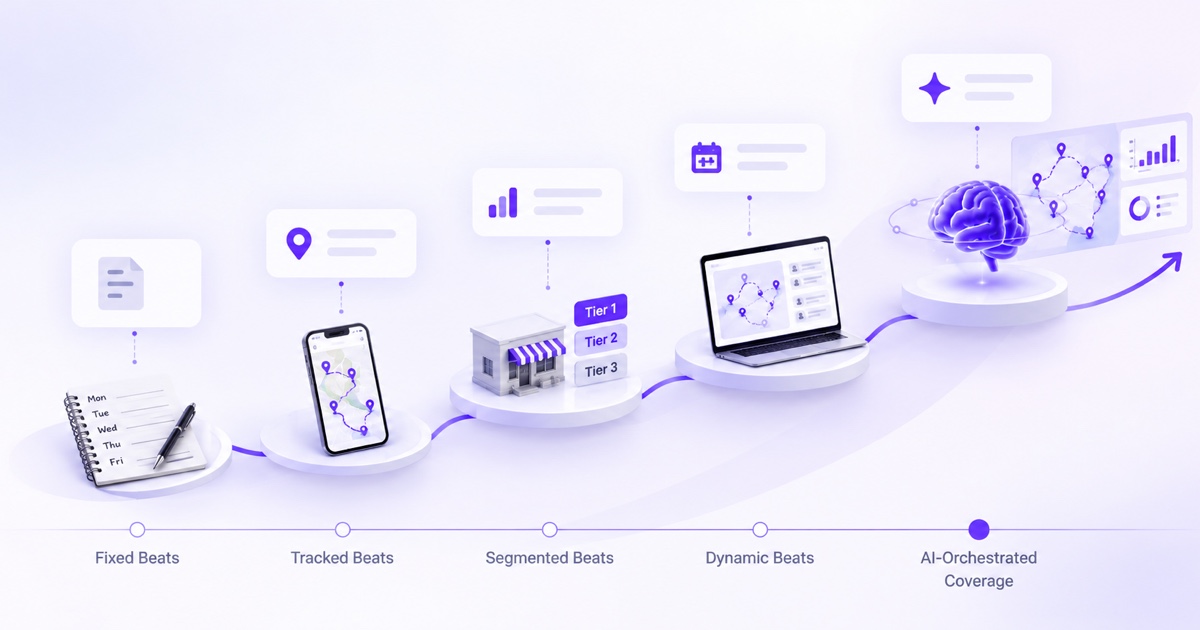
Ask a sales director how mature their route-to-market execution is, and the answer almost always overstates it. Most companies point to a GPS tracking rollout or a mobile order-booking app as evidence of a modern RTM operation. Both are real steps forward. Neither is close to where the maturity curve actually ends, and the gap between "we digitized the beat plan" and "the beat plan adjusts itself to demand" is where most of the commercial upside in RTM sits unclaimed.
It helps to be precise about the stages, because the jump from one to the next requires a different kind of investment each time, not just more of the same.
The five stages, honestly assessed
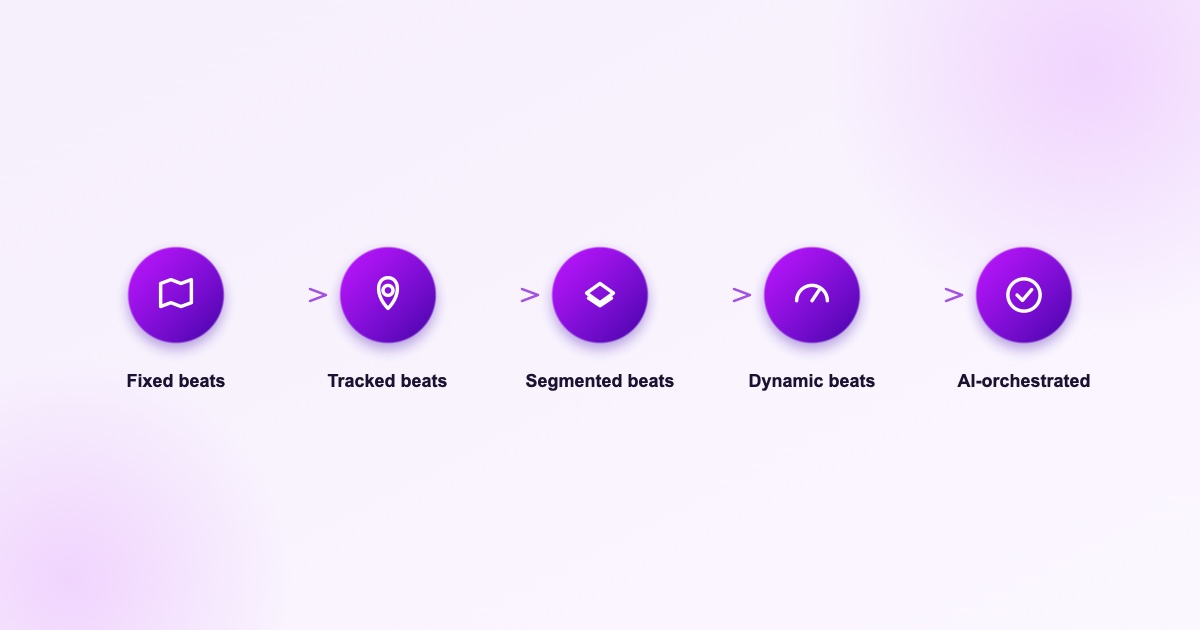
Stage one is fixed beats. A rep visits the same outlets, in the same order, on the same day every week, regardless of what is actually happening at each store. This is where most traditional trade networks started and, uncomfortably often, still run today. It is simple to plan and cheap to administer, and it treats a fast-growing outlet and a declining one identically.
Stage two is tracked beats. GPS and check-in data now confirm whether the fixed beat actually happened. This is real progress, an honest first-party record of coverage instead of a paper claim, but it answers "did the visit happen" without touching whether the visit happened at the right frequency in the first place.
Stage three is segmented beats. Outlets are tiered by value and visit frequency finally varies by tier, using the same logic outlet tiering is built on. This is where most digitization budgets are spent and where most projects quietly stop, because segmentation still runs on a static, periodically-refreshed model rather than one that reacts to what is happening this week.
Stage four is dynamic beats. The plan adjusts within the week based on live signals: a sudden spike in an outlet's offtake, a stockout flagged by the previous rep, a competitor promotion detected through pricing data. Coverage stops being a fixed schedule and becomes a working plan that responds to what is actually happening on the ground.
Stage five is AI-orchestrated coverage. The system does not just react to signals, it predicts which outlets need attention before a rep would notice, sequences the day's route for minimum travel time and maximum revenue capture, and continuously learns which interventions actually moved sales versus which ones did not. Very few networks operate here today, which is exactly why the ones that do have a real, defensible execution advantage rather than a marginal one.
Why the stage-three plateau is so common
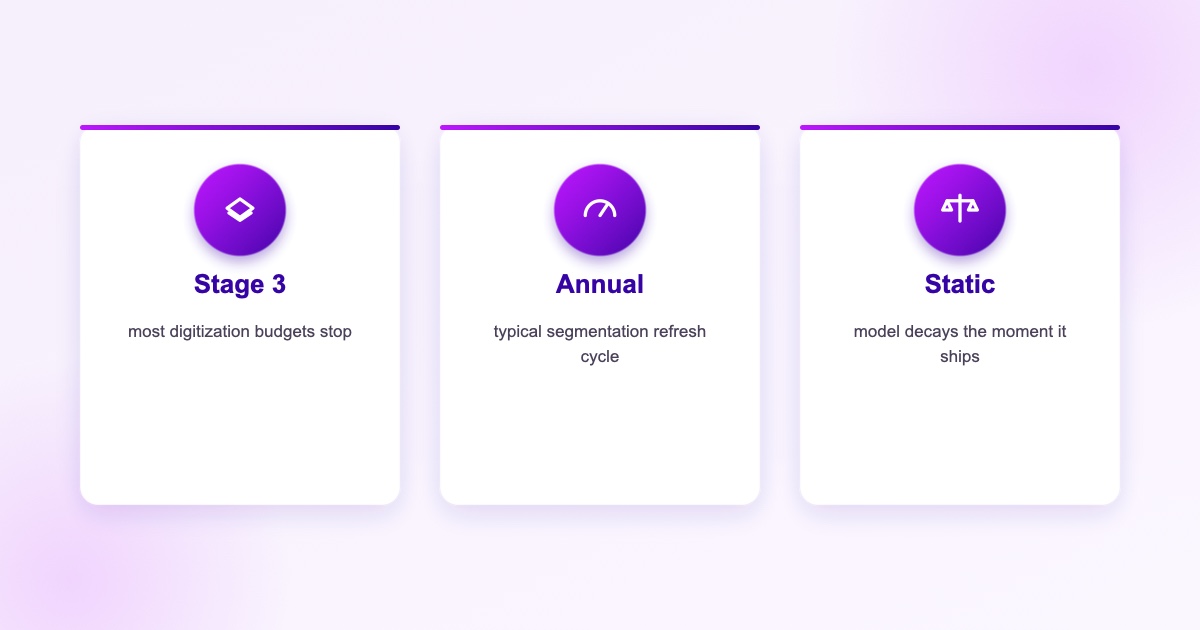
Segmented beats deliver a visible, measurable improvement almost immediately, which is precisely what makes the stage feel like a finish line. Stockouts drop, service levels on top-tier outlets improve, and the project gets marked complete in a steering committee deck. The problem is that a segmentation model built once and refreshed annually starts decaying the moment it is deployed, because outlet behavior does not hold still for a year.
The move to stage four is less about new technology and more about a change in operating rhythm: segmentation has to become a living model, updated on a cycle that matches how fast outlet behavior actually shifts, not how often the planning calendar allows for a review.
What actually has to be true before stage five is worth attempting
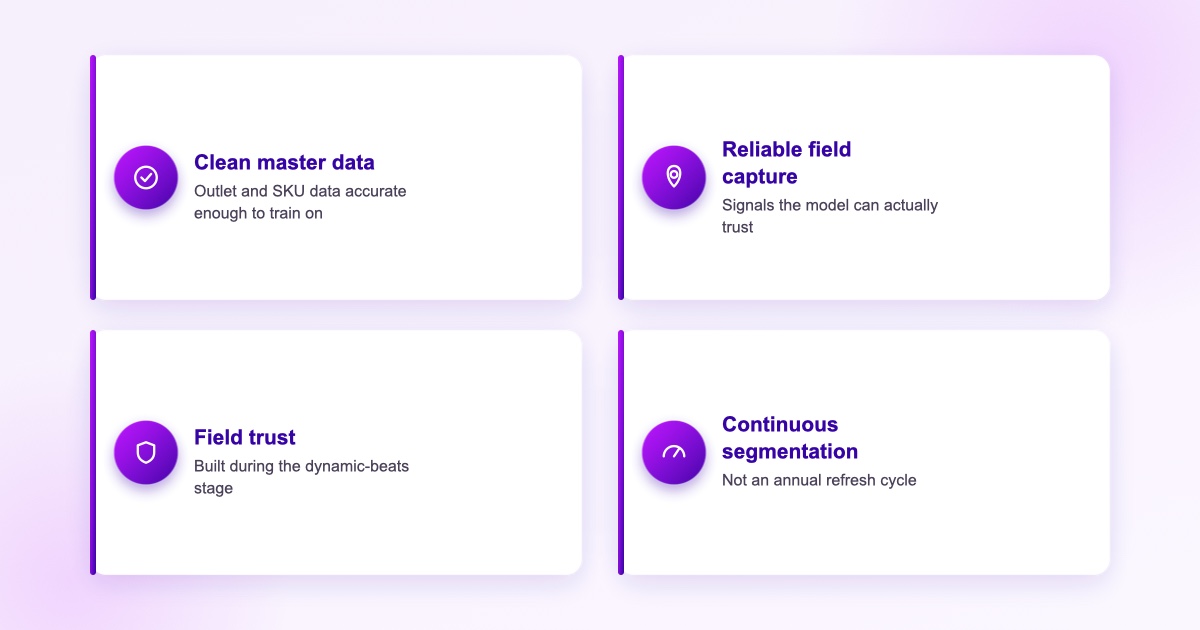
AI-orchestrated coverage is not a stage a network can buy its way into by skipping the ones before it. It depends on clean outlet and SKU master data, because a prediction model trained on messy inputs produces confident, wrong recommendations. It depends on reliable field data capture, because the system is only as good as the signals feeding it. And it depends on field trust already built during the dynamic-beats stage, because a rep who does not trust an app's suggestions will quietly override them, which starves the model of the very data it needs to improve.
The honest sequencing question for most leadership teams is not "how do we get to stage five," it is "what is actually stopping us from leaving stage three." Usually the answer is a segmentation model that was built once and never revisited, not a lack of sophisticated technology.
Frequently asked questions
Fixed beats (same outlets, same order, every week), tracked beats (GPS-confirmed visits), segmented beats (visit frequency varies by outlet tier), dynamic beats (the plan adjusts within the week to live signals), and AI-orchestrated coverage (the system predicts and sequences coverage ahead of demand).
Most sit at stage two or three: they have GPS-tracked beats and some form of outlet segmentation, but the segmentation is refreshed periodically rather than continuously, which caps them below the dynamic-beats stage where the real commercial upside starts.
Segmentation delivers a visible improvement fast, which makes it feel like a finish line. But a segmentation model built once and refreshed annually decays as outlet behavior shifts, and moving past this stage requires treating segmentation as a living model rather than a one-time project.
Clean outlet and SKU master data, reliable field data capture, and field trust in the recommendations already built during the dynamic-beats stage. Skipping straight to AI orchestration without these in place produces confident, inaccurate recommendations that reps quickly learn to ignore.
It depends less on company size and more on whether the prerequisites are in place. A smaller network with clean data and high field trust can reach dynamic and even AI-orchestrated coverage faster than a larger one still fighting master data quality issues.
Find out which stage your RTM is actually in
Vxceed helps commercial teams move past tracking and into dynamic, data-driven coverage without a wholesale rebuild of the field organization.
Request a demo