Designing Outlet Tiering That Actually Drives Field Priorities
 Team Vxceed · September 2026
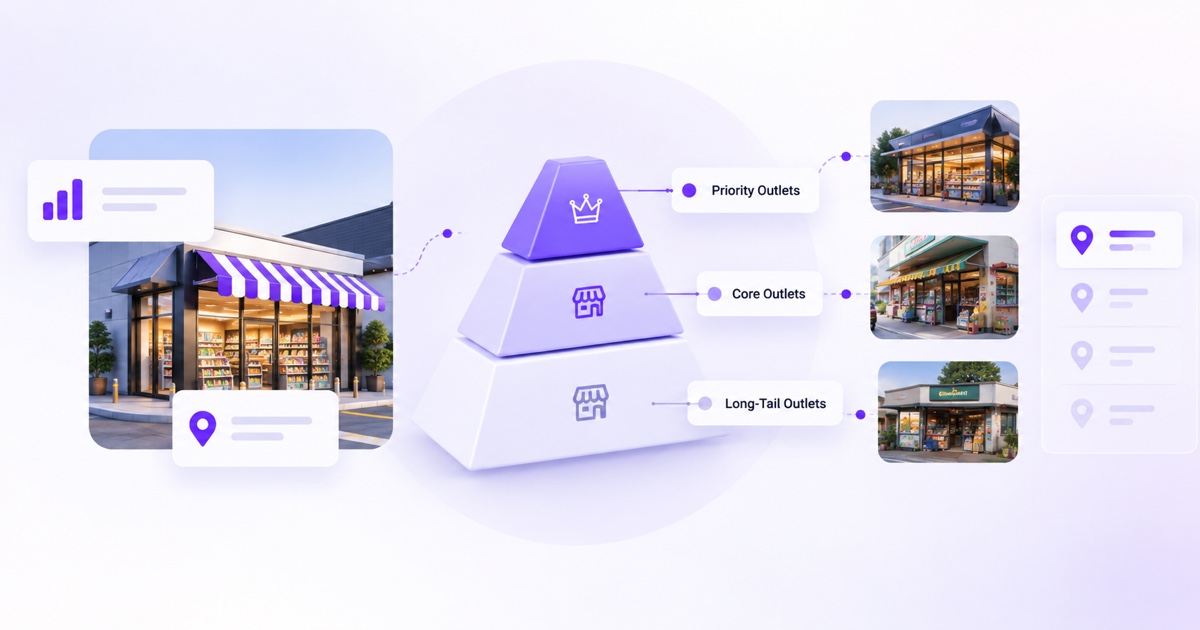
Outlet tiering has a credibility problem in most FMCG organizations, and it is largely self-inflicted. A commercial analytics team builds a clean, defensible tiering model, presents it in a quarterly review, and watches it have almost no effect on what happens in the field the following Monday. The beat plan looks the same. Visit frequency does not change. The rep never sees the tier at all.
This is not a data problem. It is a design problem. A tiering model that lives in a dashboard and never reaches the beat plan is not actually driving field priorities, no matter how sophisticated the scoring behind it.
Fewer tiers, held more strictly
The instinct when building a tiering model is to add granularity, five or six tiers instead of three, because more tiers feel more precise. In practice, granularity beyond three or four tiers rarely survives contact with a real beat plan. A rep cannot meaningfully distinguish between six different visit-frequency rules across a 40-outlet beat, and a scheduling system built around that many tiers tends to produce plans too complex for anyone to sanity-check by eye.
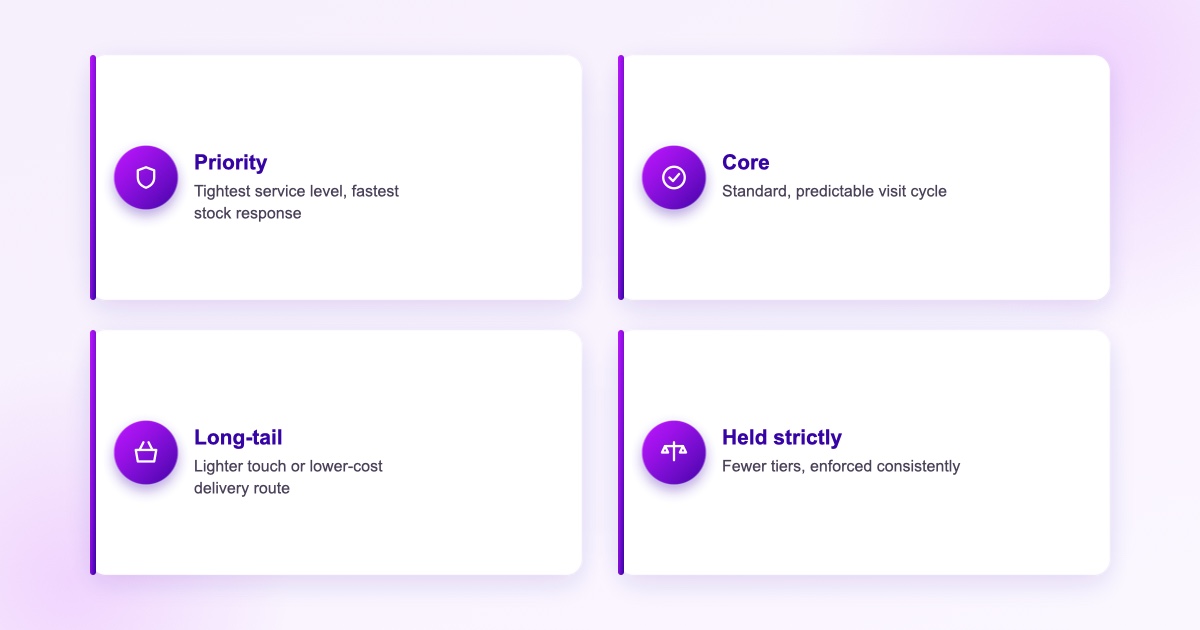
Three tiers, held strictly, tend to outperform six tiers applied loosely. Priority outlets get the tightest service level and the fastest response to stock issues. Core outlets run on a standard, predictable cycle. Long-tail outlets get a lighter-touch model, sometimes a lower visit frequency, sometimes a shift to a lower-cost delivery route instead of a dedicated rep visit. The discipline is in holding the line on what each tier actually gets, not in how many tiers exist.
The variable set that field teams actually believe
A tiering model built purely on trailing revenue is easy to defend analytically and easy for a field team to distrust, because revenue alone misses growth trajectory, credit reliability, and how consistently an outlet actually sells through what it is stocked with. A rep who watches a declining outlet keep its top-tier status because of last year's numbers loses faith in the whole model quickly, and that distrust spreads to tiers that were actually correct.
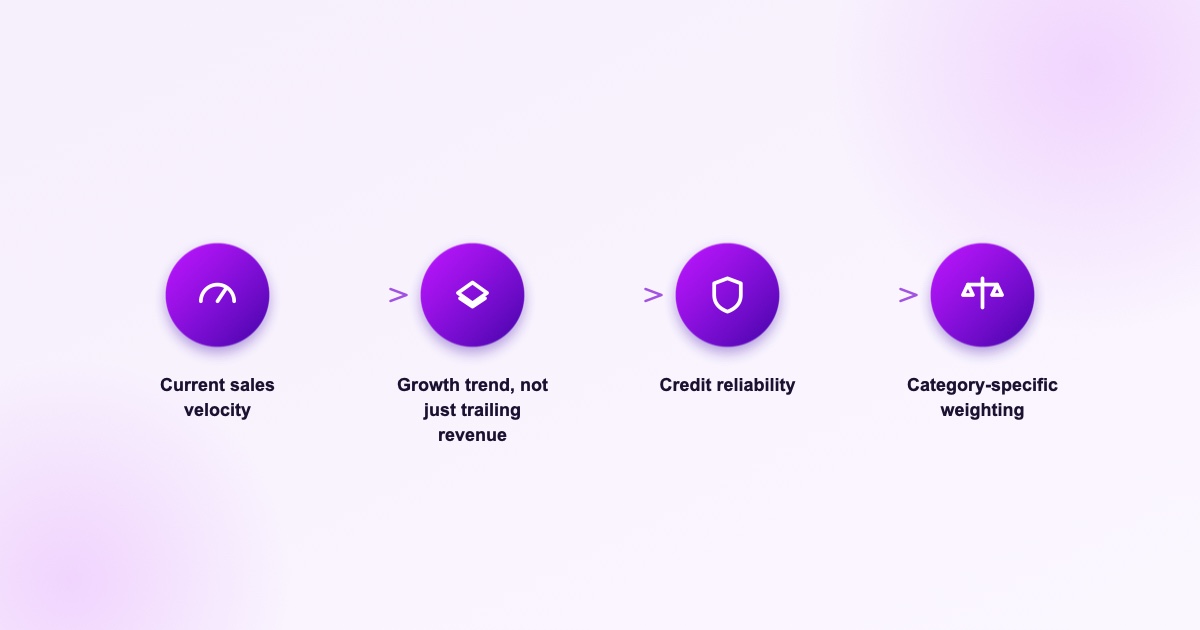
A more defensible model weighs current sales velocity alongside growth trend, so an accelerating outlet moves up before its revenue catches up to justify it on paper. It factors in credit reliability, because a high-revenue outlet with chronic late payment is a worse bet than the raw number suggests. And it allows category-specific weighting where relevant, since category management priorities do not always align neatly with an outlet's overall revenue rank.
Making the tier visible in the one place that matters
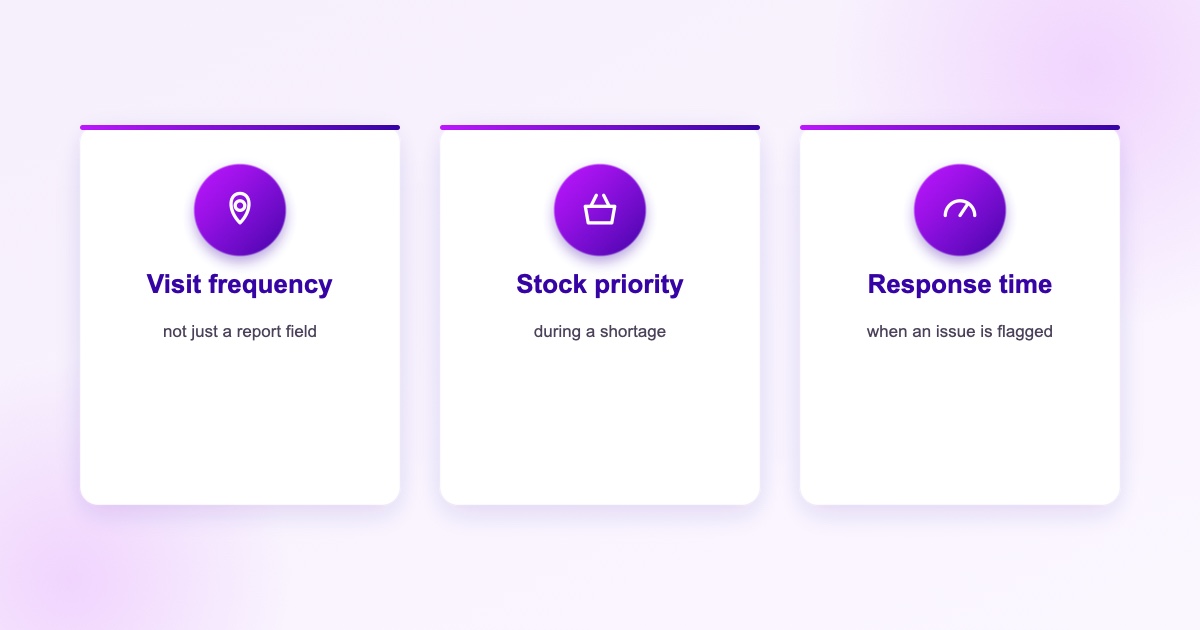
None of the above matters if the tier does not reach the beat plan. The single highest-leverage design decision in outlet tiering is making the tier drive three concrete things automatically: visit frequency, stock allocation priority during a shortage, and response time when an issue is flagged. If a tier changes only a field in a report and none of those three, it will not change field behavior no matter how well-reasoned the model is.
This connects tiering directly to the broader route-to-market strategy a company runs on, and it is the reason tiering built as a standalone analytics exercise, disconnected from beat planning and stock allocation systems, tends to underperform tiering built as one component of a connected commercial system from the start.
Refreshing tiers on outlet time, not planning-calendar time
An annual tiering refresh is a planning-calendar decision, not a market-driven one, and outlet behavior does not respect fiscal years. A quarterly refresh catches most meaningful shifts without creating so much churn that the field stops trusting any given tier's stability. The goal is not constant change, it is a cycle fast enough that a genuinely shifting outlet gets reclassified before the mismatch shows up as a stockout or a wasted visit.
Frequently asked questions
Three tiers, strictly enforced, tend to outperform five or six tiers applied loosely. Beyond three or four tiers, most field teams cannot meaningfully distinguish visit-frequency rules across a real beat, and the added granularity rarely survives contact with day-to-day scheduling.
Current sales velocity, growth trend, and credit reliability together, with category-specific weighting where relevant. Revenue alone misses accelerating or declining outlets and can keep a high-risk, high-revenue outlet in a top tier it no longer deserves.
Because the tier stays in a dashboard or report and never reaches the beat plan. A tier only changes field behavior if it automatically drives visit frequency, stock allocation priority, and response time to flagged issues, not just a label in an analytics tool.
Quarterly is a reasonable default. Annual refreshes follow the planning calendar rather than actual outlet behavior, letting mismatches accumulate for months. Refreshing too frequently, on the other hand, creates churn that erodes field trust in the tiers.
The tiering logic is the same, but the levers differ. In general trade, tiering mainly changes visit frequency and stock priority through the distributor. In modern trade, it more often changes account management attention and promotional support at the centralized buying level.
Turn outlet tiers into a beat plan reps trust
Vxceed connects outlet segmentation directly to daily beat plans and stock allocation, so a tier changes what actually happens in the field, not just a report.
Request a demo