The Distributor Onboarding Checklist for a Successful DMS Rollout
 Team Vxceed · September 2026
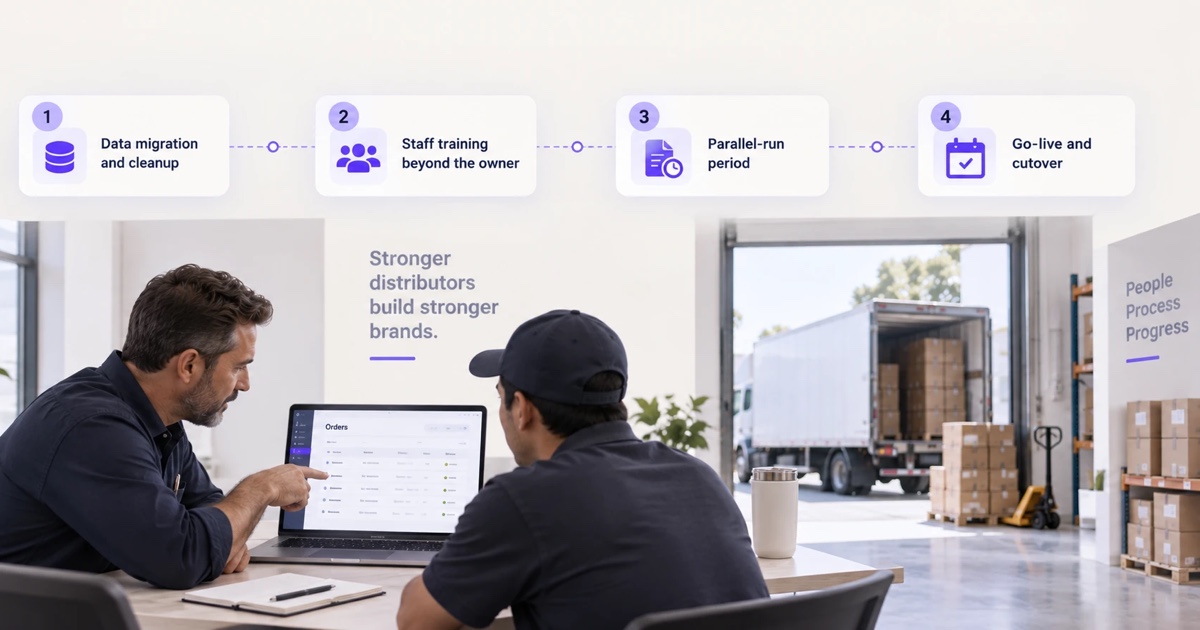
A distributor management system rollout gets evaluated, budgeted, and approved as a software decision, and then it succeeds or fails almost entirely on something that has very little to do with the software: how well the distributor's own staff were brought onto it. A perfectly capable DMS platform can sit unused in favor of a distributor's old Excel sheet and phone calls to the sales team, not because the system is broken, but because nobody on the distributor's side was properly walked through why it matters or how to actually use it day to day.
This is worth taking seriously as its own discipline, separate from the software selection and implementation timeline. Onboarding is not a training session at go-live, it is a sequence that starts before the system is even switched on.
Start with data migration, not the software demo
A distributor's existing records, outlet lists, credit terms, product mappings, outstanding balances, are usually inconsistent, partially out of date, and scattered across a mix of spreadsheets and paper. Migrating this data into the new system honestly, rather than starting fresh and hoping the gaps do not matter, is the single most underestimated part of onboarding.
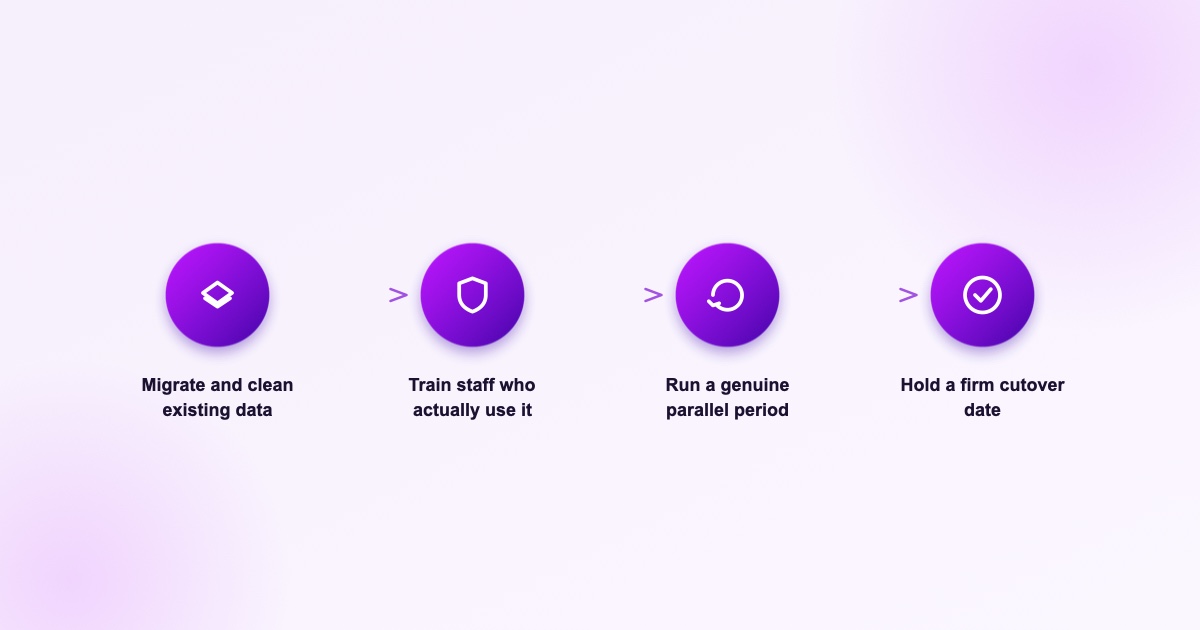
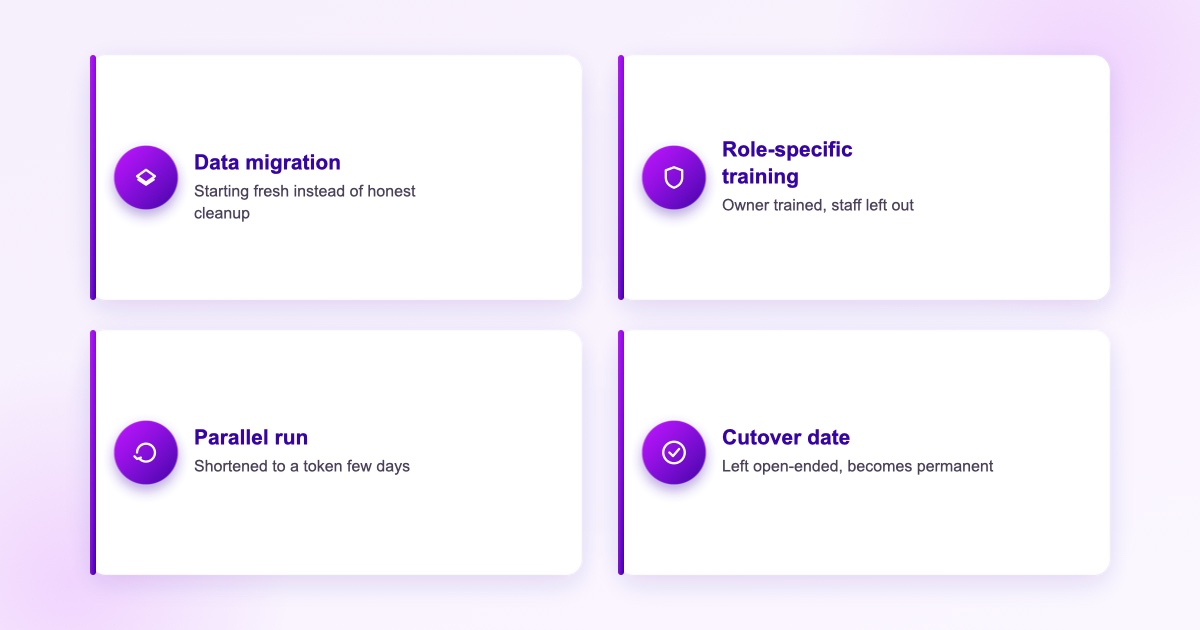
Starting fresh feels faster and creates a worse problem: a system that does not reflect a distributor's actual outstanding credit or outlet history is a system the distributor's own staff will not trust, and staff who do not trust the data quietly go back to the records they know are accurate, even if those records live in a notebook.
Train the staff who actually use it, not just the owner
DMS onboarding often defaults to training the distributor's owner or senior manager, on the reasonable assumption that they will pass the knowledge down. In practice, the people entering orders, managing stock, and reconciling payments day to day are rarely the same people sitting in that training session, and knowledge transfer down the chain is inconsistent at best.
A more reliable approach trains the actual order-entry and warehouse staff directly, with role-specific sessions rather than one general walkthrough, and builds in a designated point of contact at the distributor who can answer day-to-day questions once the brand's implementation team moves on to the next territory.
Run parallel before cutting over, and mean it
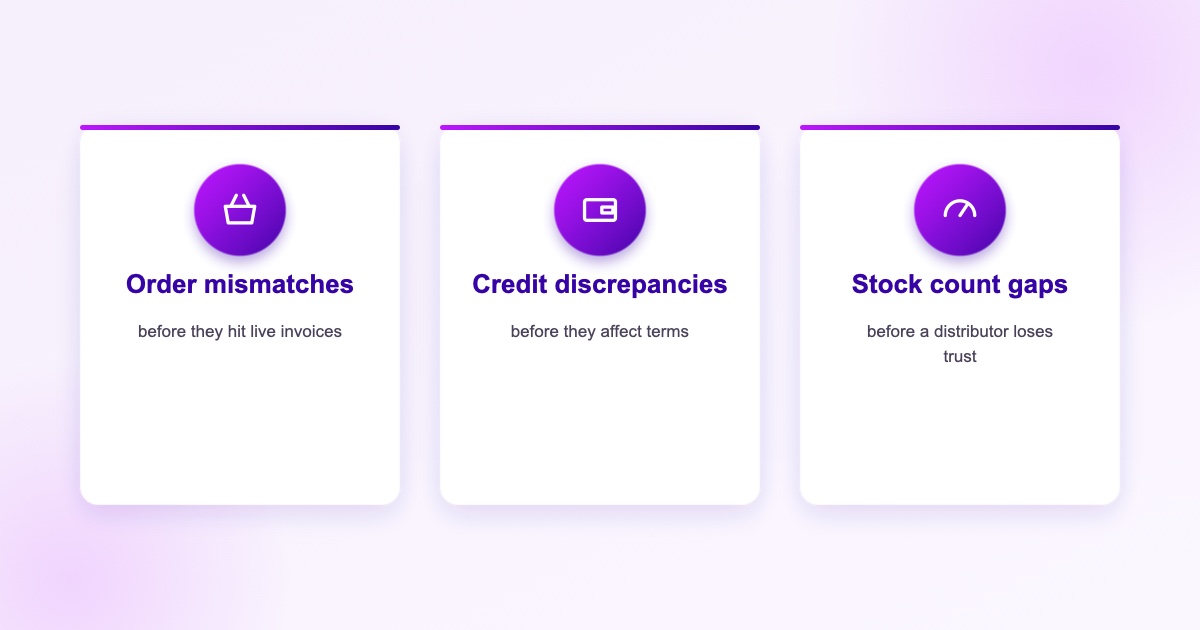
A parallel-run period, where the distributor operates on both the old process and the new system simultaneously for a defined stretch, sounds like duplicated effort and is actually the fastest way to surface discrepancies before they matter. Order quantities that do not match, credit balances that come out differently between the two systems, stock counts that diverge, all of these are far cheaper to catch during a parallel run than after a hard cutover when live orders depend on the new system being right.
The temptation to skip this step or shorten it to a token few days is strong, because it does genuinely slow the rollout timeline. It is worth resisting that temptation specifically for a distributor's first DMS experience, since a rough cutover in the first weeks colors how much that distributor trusts the system for months afterward.
Set a firm cutover date, and hold it
An open-ended parallel run tends to become a permanent one. Without a firm, communicated cutover date, a distributor's staff have no pressure to fully commit to the new system, and the old process stays the real system of record indefinitely while the new one collects data nobody actually acts on. Setting the date early, tying it to specific readiness criteria rather than a fixed calendar point, and holding it once those criteria are met keeps the transition from drifting.
A distributor onboarding process built on this sequence, honest data migration, role-specific training, a genuine parallel run, and a firm cutover, converts a DMS rollout from a software installation into an operational transition the distributor's team actually owns.
Frequently asked questions
The software can work perfectly and still go unused if the distributor's own staff were never properly walked through how and why to use it. Onboarding failure usually looks like staff quietly reverting to their old Excel sheets and phone-based process while treating the new system as extra reporting work.
A system that does not reflect a distributor's real outstanding credit or outlet history is a system the distributor's own staff will not trust, and they will quietly fall back on records they know are accurate, even if that means a notebook, rather than the new DMS.
The actual order-entry and warehouse staff, not just the distributor's owner or senior manager. Knowledge transfer down the chain from a single training session is unreliable, so role-specific training for the people who use the system daily works better.
A stretch of time where the distributor operates on both the old process and the new DMS simultaneously, so discrepancies in orders, credit balances, and stock counts surface and get fixed before the business depends on the new system alone.
Without one, a parallel run tends to become permanent, since staff have no real pressure to fully commit to the new system. A firm date tied to readiness criteria keeps the transition from drifting indefinitely.
Get distributor onboarding right the first time
Vxceed's DMS rollouts include a structured distributor onboarding process built from what actually causes adoption to fail, not just a software handover.
Request a demo

