Field Rep Attrition and Ramp-Up: How Technology Shortens the Curve
 Team Vxceed · September 2026
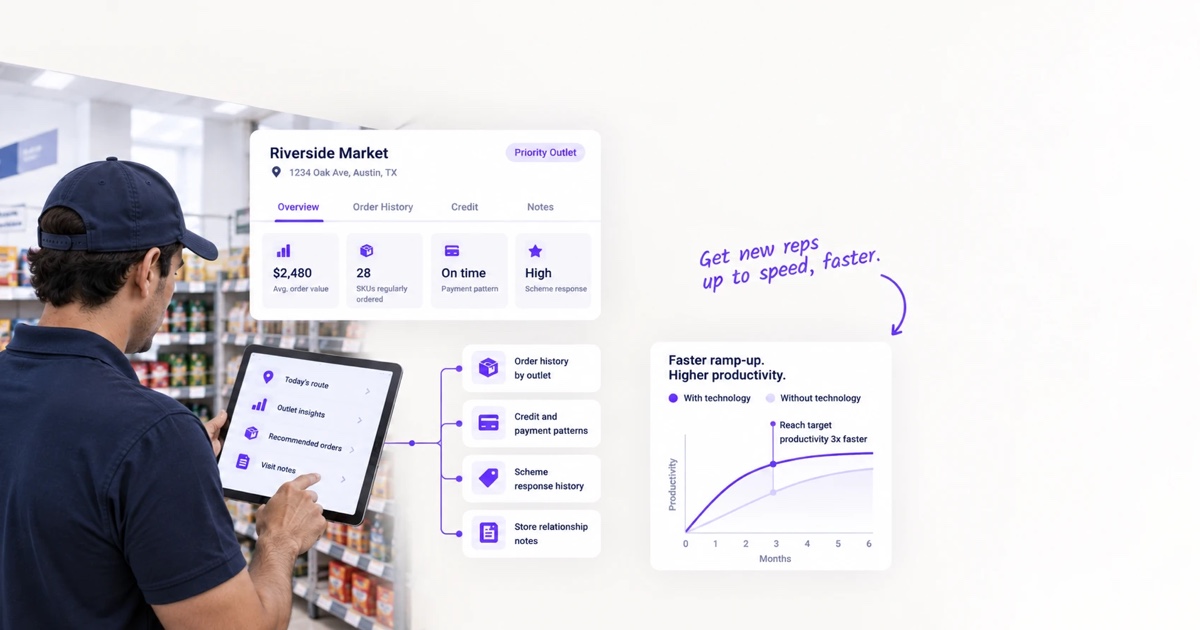
Field sales attrition in FMCG runs high almost everywhere, and it is worth being honest about why: the role is physically demanding, the compensation ceiling is often low relative to the effort, and the career path out of a field territory is not always obvious. None of that is likely to change fundamentally through better management alone, and most sales leaders have made a kind of peace with attrition as a structural feature of the business rather than a solvable problem.
What deserves less peace-making is ramp time: how long it takes a new rep to reach the productivity level of the person they replaced. Attrition is largely a given. A three-month, six-month, or in some networks even longer ramp period is not, and it is the part of this problem that technology can actually shorten.
Where the ramp time actually goes
A departing rep does not just leave a territory, they take a mental model of it with them: which outlets pay on time and which need careful credit handling, which SKUs actually move in this specific cluster versus the category average, which store manager responds to a scheme pitch and which one needs a relationship built over several visits first. None of this lives in a CRM in most networks. It lives in the departing rep's head, and it leaves when they do.
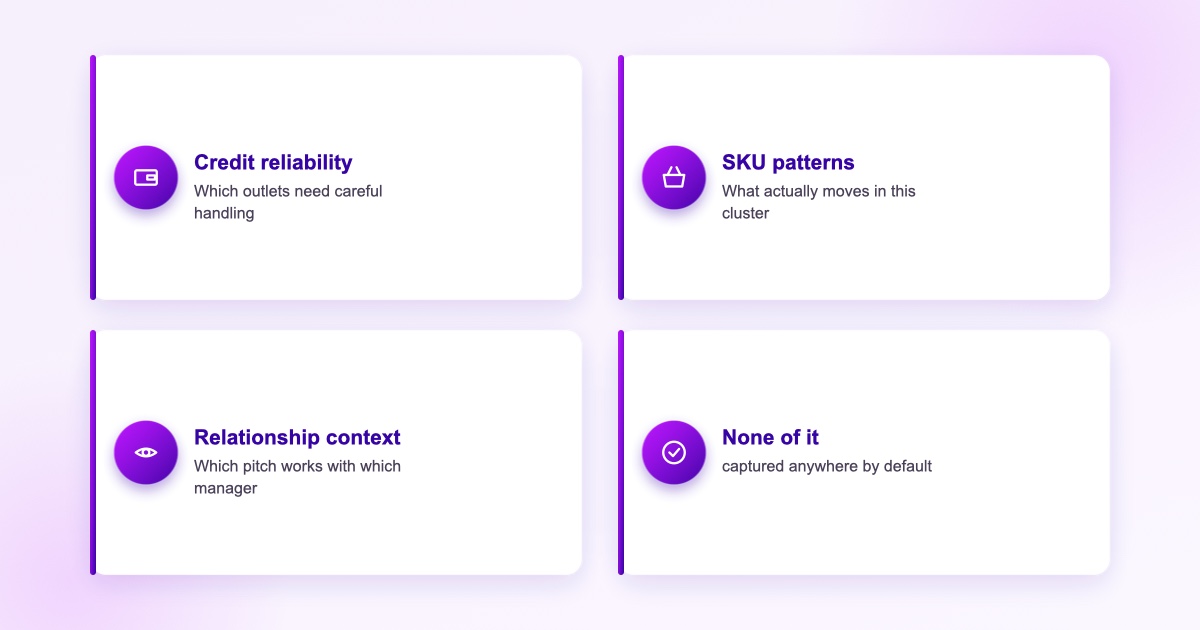
A new rep starting without any of that context rebuilds it the slow way, through trial and error across dozens of outlets, over the same weeks or months every predecessor spent building it before them. The territory does not get more productive during that period, it regresses to whatever a rep with zero outlet context can manage, which is usually well below what the departing rep was delivering in their final months.
What a system actually needs to capture to help
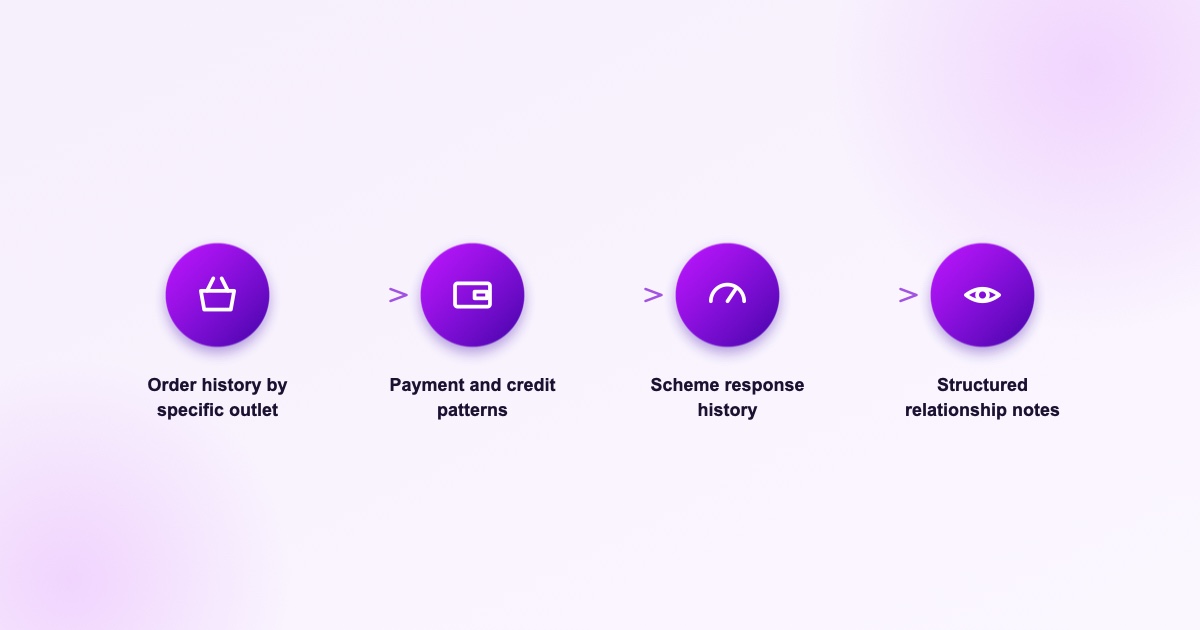
Basic order history helps, but it is not enough on its own. What actually compresses ramp time is a system that surfaces this history in a form a new rep can act on immediately: a suggested order quantity based on the outlet's real pattern rather than a generic territory average, a visible note on payment reliability before the first credit conversation happens, and a record of which schemes worked at this specific outlet the last several times they were offered.
This is different from simply digitizing order booking. It requires the previous rep, while still active, to have been capturing relationship context in structured form, not just transaction data, which is a habit worth building into the standard workflow well before attrition becomes a concern for a given territory.
Why this matters most in the territories that turn over fastest
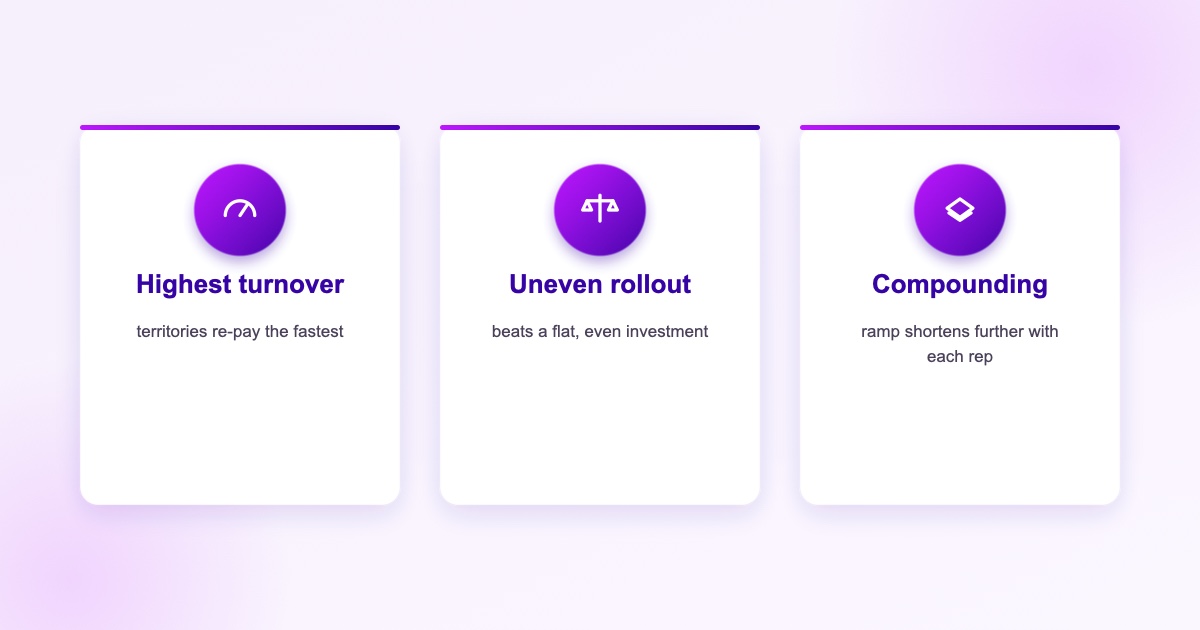
Attrition is rarely evenly distributed across a network. Certain territories, often the most demanding or lowest-paying relative to effort, turn over reps far more frequently than the network average. Those are precisely the territories where a captured knowledge base pays for itself fastest, because they are the ones re-experiencing the full ramp-time cost most often.
A network that identifies its highest-turnover territories and prioritizes structured knowledge capture there first, rather than rolling it out evenly everywhere, tends to see the clearest return fastest. This is a case where uneven investment, concentrated where the problem is worst, outperforms a uniform rollout.
What a shortened ramp actually looks like in practice
A new rep with access to captured outlet history does not skip the learning curve entirely, they still need to build genuine relationships and earn trust at each store. What changes is the starting point: instead of guessing at order quantities and credit risk from scratch, they start with a working baseline that took their predecessor months to build, and spend their own ramp time refining it rather than reconstructing it.
The compounding effect matters more than any single ramp cycle. Every rep who captures relationship context well leaves a better starting point for whoever comes next, which means the ramp curve for a given territory should get shorter over time as the knowledge base accumulates, not stay flat regardless of how many reps have already passed through it.
Frequently asked questions
The role is physically demanding, compensation often has a low ceiling relative to effort, and clear career paths out of field territories are not always visible. These structural factors are unlikely to change significantly through better management alone, which is why most sales leaders treat attrition as a given rather than a fully solvable problem.
Rebuilding outlet-level context that lived only in the departing rep's memory: which outlets pay reliably, which SKUs actually move in that cluster, and which store managers respond to which kind of pitch. Without that context captured anywhere, a new rep rebuilds it slowly through trial and error.
More than transaction history. It needs order patterns specific to each outlet, payment and credit reliability notes, and a record of which schemes worked at that outlet historically, captured in structured form by the previous rep while they were still active in the territory.
Concentrating it first in the highest-turnover territories tends to deliver the clearest return fastest, since those territories re-experience the full ramp-time cost most frequently. Uneven investment aimed at the worst-hit territories usually outperforms a uniform rollout.
No. A new rep still needs to build genuine relationships and earn trust at each store. What changes is the starting point: they begin with a working baseline instead of reconstructing it from zero, which compresses the ramp without eliminating it.
Stop losing outlet knowledge every time a rep leaves
Vxceed captures outlet history, order patterns, and relationship context in the system, so a new rep inherits it instead of starting over.
Request a demo