The Real ROI of Sales Force Automation (and How to Measure It)
 Team Vxceed · September 2026
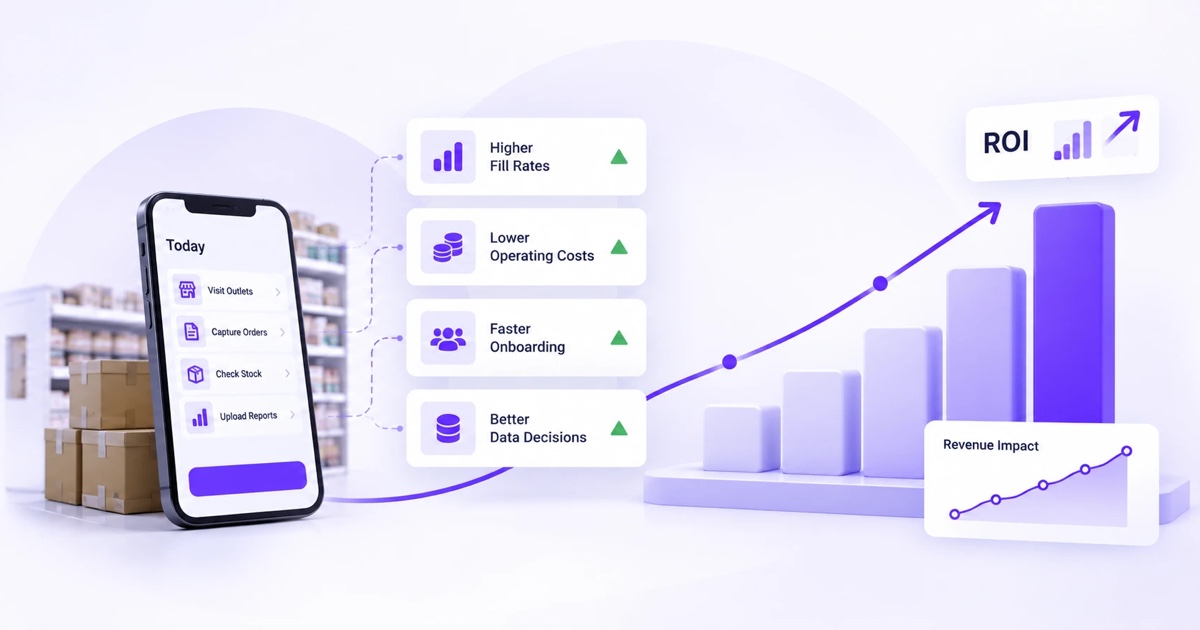
Most sales force automation business cases get built the same way: take the license cost, subtract the administrative headcount the system will replace, and present the difference as ROI. It is a defensible number for a procurement conversation and a genuinely incomplete picture of what SFA actually returns, because the biggest value it creates rarely shows up in a headcount line at all.
This matters beyond the initial business case. Underestimating the return sets expectations that the rollout will underdeliver against even when it is working exactly as intended, and it means the metrics tracked after go-live miss most of what the investment is actually doing.
Why the headcount comparison undersells the case
Replacing manual reporting and paper order books with an app does save administrative time, and that saving is real and worth counting. It is also usually the smallest of the four value categories an SFA rollout creates, which makes it a strange choice to lead with in a business case, and a stranger one to use as the primary ongoing success metric once the system is live.
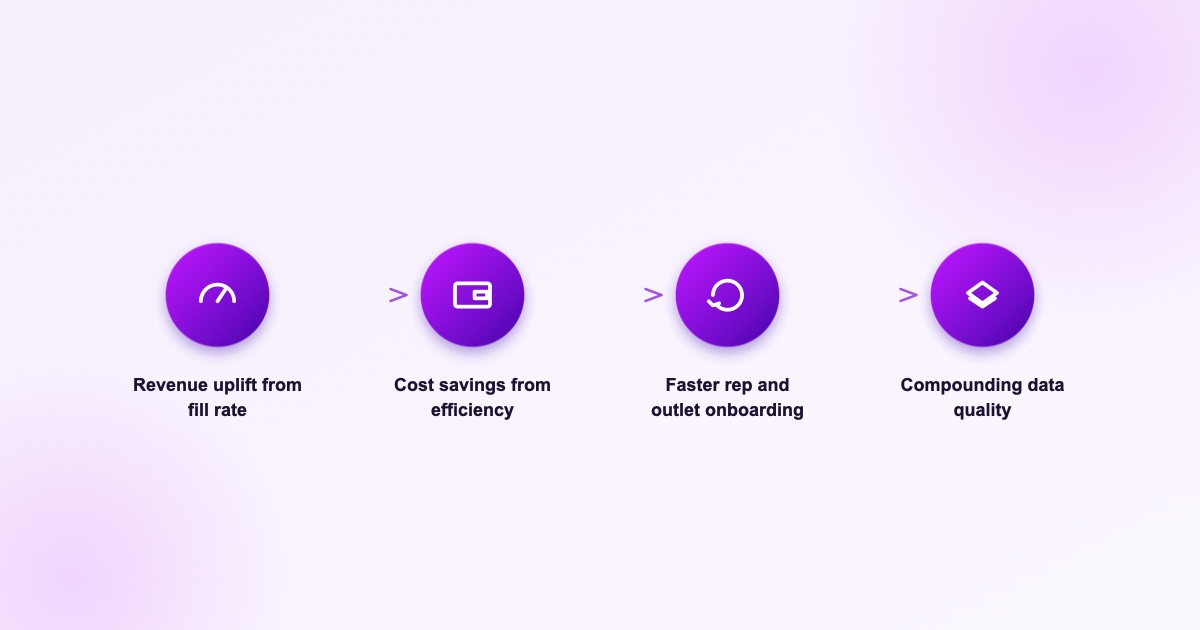
A more complete model tracks four categories: revenue uplift from improved fill rates and reduced stockouts, cost savings from administrative and travel efficiency, faster ramp time for new outlets and new reps, and the compounding value of cleaner data feeding every downstream decision, from demand forecasting to territory planning.
Revenue uplift is usually the largest category, and the hardest to isolate
Better fill rates translate directly into revenue: a rep who can see real-time stock levels and suggested order quantities places fuller orders that match actual outlet demand instead of habitual guesswork. The challenge is not whether this value exists, it is isolating it from everything else moving in a business at the same time, a seasonal shift, a promotional calendar, a competitor's stumble.
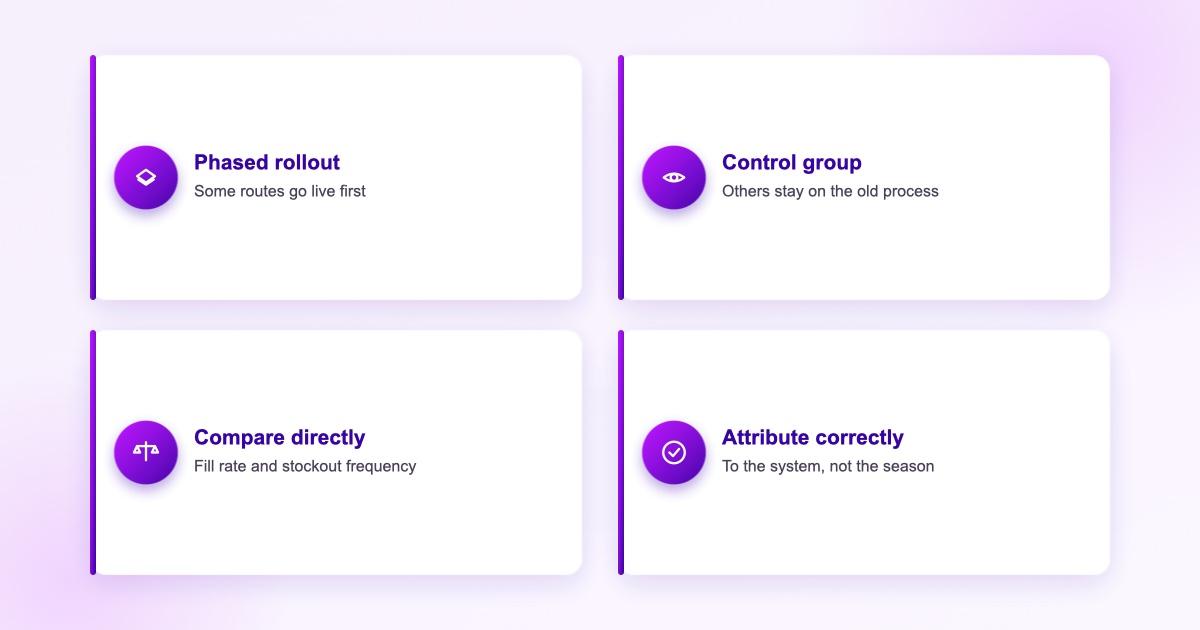
The cleanest way to isolate it is a phased rollout with a genuine control group: routes that go live first against routes that stay on the old process for a defined period, with fill rate and stockout frequency tracked on both. This is more disciplined than most rollouts attempt, and it is the only reliable way to attribute a revenue change to the system rather than to the season.
The onboarding speed value nobody puts in the business case
A new rep taking over a beat inherits an outlet's history that used to live entirely in the previous rep's head: which stores are slow to pay, which SKUs move in this territory, which manager needs a different pitch. Without that context captured in a system, ramp time for a new rep can run months, and it resets every time the territory changes hands.
An SFA platform that captures outlet history, order patterns, and scheme logic in one place compresses that ramp meaningfully, because the new rep inherits the system's memory instead of starting from nothing. This value rarely appears in an initial business case because it is hard to estimate upfront, and it becomes very visible the first time a network experiences high field turnover with and without the system in place.
Data quality as a compounding, not a one-time, return
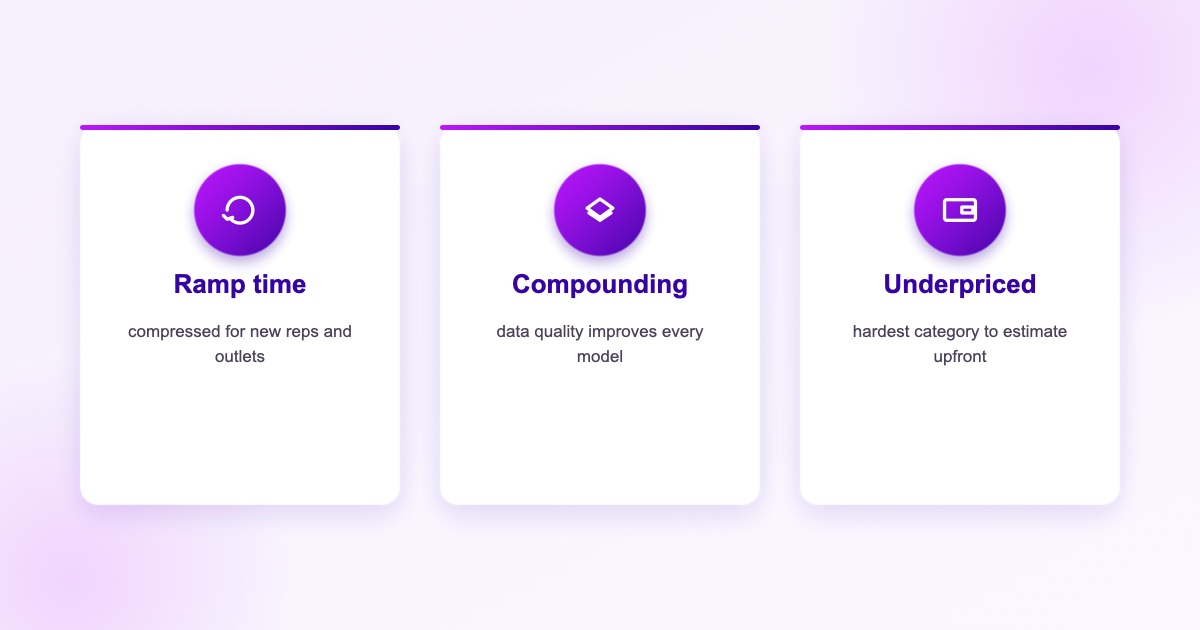
Every downstream commercial decision, from demand forecasting to outlet tiering to promotional targeting, runs on field data that used to arrive late, incomplete, and manually reconciled. An SFA system that captures this data accurately at the source does not just save the reconciliation effort, it improves the accuracy of every model built on top of that data, which is a return that compounds rather than a one-time efficiency gain.
This is the category most business cases skip entirely, not because it is small, but because it is genuinely difficult to price upfront. It is worth naming explicitly in an ROI model anyway, even qualitatively, because it is often the category that ends up mattering most two years into a rollout, well after the headcount savings have already been fully realized and stopped growing.
Frequently asked questions
Comparing license cost against administrative headcount saved and stopping there. This is usually the smallest of four value categories SFA creates, and leading with it understates the business case while setting the wrong expectations for what to track after go-live.
Revenue uplift from better fill rates and fewer stockouts, cost savings from administrative and travel efficiency, faster ramp time for new reps and outlets, and compounding data quality improvements that benefit every downstream commercial decision.
A phased rollout with a genuine control group, some routes going live first while others stay on the old process for a defined period, lets a company compare fill rate and stockout frequency directly, attributing the difference to the system rather than seasonal or promotional noise.
A new rep inherits outlet history, order patterns, and scheme logic that used to exist only in the previous rep's memory. Capturing that context in a system compresses ramp time significantly, particularly in networks with high field turnover.
Clean field data captured accurately at the source improves every model built on top of it, from demand forecasting to outlet segmentation, continuously, rather than delivering a single efficiency gain the way administrative time savings do.
Build an ROI model that captures the full return
Vxceed helps commercial teams baseline before an SFA rollout and track the categories of return that actually show up, not just the ones easiest to estimate upfront.
Request a demo